Beating Alcohol Addiction: Marvin the "Mental Health Warrior" Cat’s Emotion-First Plan


I was downtown minding my own business, sipping a diet soda and watching the world go by, when I spotted a familiar fuzzy blur slumped on a bench outside the shop. Tail twitching. Eyes narrowed. Fur ruffled. Yep. It was Marvin the "Mental Health Warrior" Cat.
"Marvin," I said cautiously, approaching like he might bolt. "You okay?"
He didn’t look up. Just grunted. "Define 'okay.' If you mean barely holding it together and wondering why feelings exist, then yes. I’m fantastic."
I sat down next to him. This wasn’t just any Marvin mood. This was the post-bender emotional hangover version of Marvin. He’d been trying — really trying — to stay sober!
But like many Warriors in recovery, he was learning an uncomfortable truth:
The hardest part isn’t quitting... It’s staying quit!
Especially when your emotions sneak up on you like ninja raccoons with bad attitudes and zero respect for personal space.
The Warrior Story
Marvin finally looked at me.
“You built this program, right?” he asked. “The whole Mental Health Warrior thing? The mindset rules, the coins, the books — all of it. And… you were an alcoholic, weren’t you?”
I nodded. “Yeah. Twenty years of struggling with Bipolar Disorder, Alcoholism, Anxiety Disorders and PTSD.”
“Alcohol was my escape hatch,” I said. “Until it became my prison.”
“It left me feeling so powerless that I tried to end my life. But in that darkest moment, I realized something life-changing — my emotions weren’t the enemy. Learning how to face them was the answer.”
Armed with that truth, I created the Mental Health Warrior Program — a bold new SELF-HELP approach that puts YOU in charge.
So you can take charge of your emotions, overcome challenges and build the life you really want.
Triumphing Over Alcohol
Marvin stared into his half-empty cup. “So what made it finally stick for you?” he asked. “Because I’ve kicked alcohol to the curb more times than I can count. But my emotions?” He shook his head. “They jump me in dark alleys.”
I smiled. “That’s exactly it. The breakthrough wasn’t quitting alcohol — it was learning how to manage my emotions.
Everything changed once I understood that.”
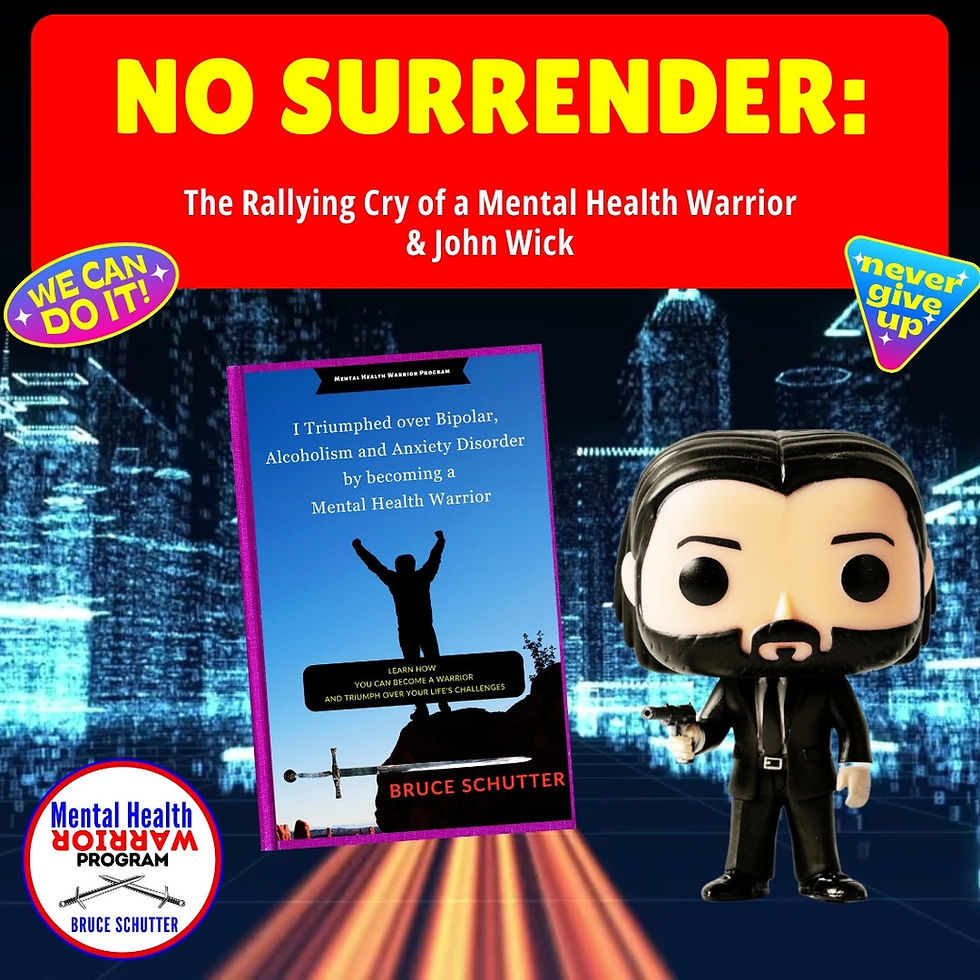
“One big help?” I added, tapping my bag. “My book, I Triumphed over Bipolar, Alcoholism and Anxiety Disorder by Becoming a Mental Health Warrior. I poured everything into it — my story, the mindset rules, and the tools that quite literally saved my life.”
“It’s the blueprint for becoming a Mental Health Warrior,” I continued, “and for finally learning how to embrace emotions instead of running from them.”
I leaned closer. “Let me show you the three lessons that helped me stay sober — and finally kick alcohol to the curb for good.”
Lesson 1: Life Isn’t Boring Without Alcohol
“For a long time,” I began, “I thought sobriety meant living in black-and-white. No fun. No excitement. Just dull routines and way too much herbal tea.”
Marvin’s ears twitched. “Accurate.”
“But I learned alcohol wasn’t creating fun — it was numbing my emotions and pretending to be fun.”
“When I became a Warrior, I stopped running from my emotions and started facing them. And once I wasn’t numbing everything — joy, laughter, connection or pain — life actually became more colorful.”
“I started enjoying real moments again,” I said. “Good conversations. Deep laughs. Being outside. Feeling proud of myself. And yes… not waking up in a laundry basket with nachos in my pocket.”
Marvin’s Takeaway:
Marvin grimaced. “The nachos part hits close to home.”
“Being a Warrior doesn’t mean life gets boring,” I told him. “It means you learn how to have real fun — the kind that doesn’t disappear the next morning.”
Marvin considered this. “So… fun without regret.”
“Exactly,” I said.
He muttered, “I guess karaoke night sober doesn’t have to be a crime. Maybe.”
Lesson 2: I Faced My Mental Health Disorders
“Anxiety was one of my biggest triggers,” I began. “It wasn’t just uncomfortable — it was paralyzing. Drinking made it disappear for a little while, which felt like magic… until it came back louder, meaner and twice as heavy.”
Marvin’s tail drooped. “Every time I try to sit still, my brain does backflips over unpaid bills and past embarrassments from 2009.”
“Trust me,” I said. “I lived there for decades. Bipolar mood swings, PTSD flares and anxiety spikes all sent me running for the bottle.”
“But the only way out… is through.”
“Once I stopped numbing everything, I had to face what I was feeling. That’s when the Warrior tools kicked in — breathing exercises, cold water on my face, quick walks, journaling and anything that helped me stay with the feeling instead of sprinting away from it.”
“These tools helped me face my anxiety, triumph over it and break the addiction loop one Warrior choice at a time.”
Marvin’s Takeaway:
Marvin groaned. “So when I want to drink, I’m probably not just craving alcohol… I’m trying to escape a feeling?”
“Exactly,” I said. “That’s the Warrior shift. You pause, name what you’re feeling and use a tool before the bottle gets a vote.”
Marvin looked down at his paws. “So if anxiety shows up, I don’t have to drink to make it disappear. I can breathe, walk, call someone or sit with it until it passes.”
“That’s how you break the loop,” I said. “One feeling. One tool. One Warrior choice at a time.”
Lesson 3: I Forgave Myself for the Past
“Here’s the hardest part, Marvin,” I said. “I had to stop blaming myself.”
“For years, alcohol was my escape — my numbing device, my way of avoiding emotions I didn’t know how to handle. I wasn’t weak… I was surviving the only way I knew how.”
Marvin’s eyes flicked up. “But the guilt,” he said quietly, “it’s like a playlist on repeat.”
“I know,” I said. “Mine was too. I carried shame for years — every mistake, every blackout, every Why did I do that? moment. I kept punishing myself long after the battles were over.”
I tapped the book on my knee — I Triumphed over Bipolar, Alcoholism, and Anxiety Disorder by Becoming a Mental Health Warrior.
“That’s why the first ten Mindset Rules are about building your foundation. They’re the rules you need on day one — when everything feels impossible.”
I pointed to one in particular. Mindset Rule 6: Forgive yourself for not knowing the things you know now.
“That rule cracked something open in me,” I said. “It helped me see that I didn’t have the tools yet. And once I understood that, I stopped living in the past… and started moving forward.”
Marvin’s Takeaway:
Marvin was quiet for a moment — unusually quiet.
“So,” he said softly, “I don’t have to keep drinking because I feel ashamed of the times I drank?”
“No,” I said. “That’s how the loop keeps going. Shame tells you to give up. Forgiveness gives you a place to begin again.”
Marvin nodded slowly. “So I can start from right where I am.”
“Exactly,” I said. “That’s how Warriors grow — by letting go of what they didn’t know and choosing what they can do now.”
Wrap Up
Marvin leaned back on the bench, letting the sun warm his whiskers. “You know what?” he said. “Talking about this… it actually helps. I thought admitting this stuff would make me feel more broken. But it’s the opposite.”
I reached into my bag and pulled out a fresh copy of I Triumphed Over Bipolar, Alcoholism, and Anxiety Disorder by Becoming a Mental Health Warrior, handing it to him.
“So you’ve got the tools whenever you need them,” I said.
Because recovering from alcohol isn’t just about stopping the drinking. It’s about reclaiming control of your emotions — and with them, the power to build the life you truly want.
If you’re reading this and battling addiction — especially alongside any other mental health challenge — hear this clearly:
You’re not broken. You’re human. And you can do this.
As Warriors, we don’t run from our emotions. We learn to face them, understand them — and move forward from alcohol one step at a time!
Bruce Schutter ⚔️
Every day is a chance to choose strength — because YOU'RE IN CHARGE!